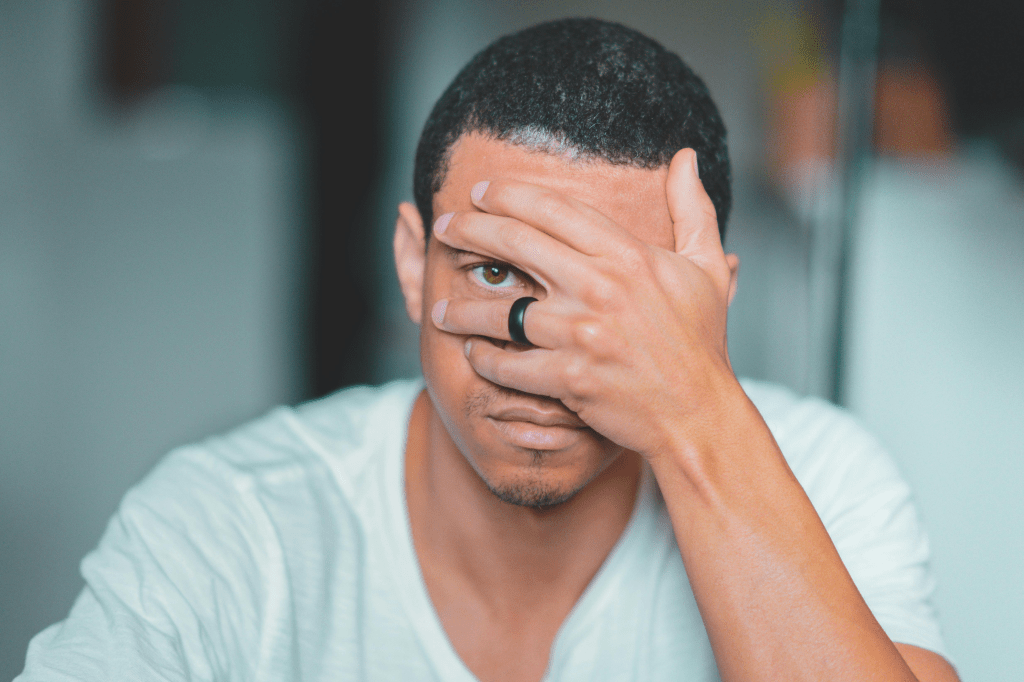
Staring Contest

A friend’s blog post on being an Asian girl in a White world had me reflecting on how people like me (i.e., non-Asians) are treated here in Japan. As a white guy in an Asian world, it will come as no surprise that I get stared at. A lot. Everywhere I go, old people break their necks gawking at me, little kids lock their eyes on me like they’re about to launch laser-guided missiles, and everyone of every age in between stares wide-eyed and mouth agape as though they’d never seen a white guy before. (I write this recognizing that as a white, American man, I’m undoubtedly on top of the minority hierarchy here.) 

I tell myself they can’t help but look. I consider myself of middling size and average features back home, but here I may as well be a giant space alien for how much I stand out. It’s only natural they’d stare. It’s instinctive. They’re not staring out of ill intent, I remind myself. But then again, maybe they are. Maybe that guy in the too-small suit is one of those right-wing loonies who holds a grudge against the United States for a war that happened long before he was born, or that old man giving me the stink eye thinks I’m yet another foreigner diluting the Japanese gene pool, or that group of snickering school girls caught me making a cultural faux pas that even a preschooler wouldn’t make. I don’t know what they’re all thinking. Who knows what anyone is thinking?

Staring isn’t benign. It may originate in curiosity, but to stare is to challenge, to draw attention to a perceived misgiving and set one’s will against another’s. There’s something animal in the response to being stared at, a gut instinct formed in our human ancestors long before language mediated actions. When I involuntarily think What the fuck you looking at?, I’m not using my evolutionarily-young frontal cortex to respond to their gaze—I’m an animal facing another animal ready to pounce.

I’ve tried several tactics in dealing with stares.

  1. The “Nani?” Approach. I say “What?” and throw back my chin. Result: They never respond and look at me confused/scared/about to call the cops.
  2. The Mirror Approach. I stare back at them, mirroring their gaze. Result: They avert their eyes and act like they totally weren’t just looking at me, or we both break our necks turning to look at each other in the most awkward staring contest ever.
  3. The Ignoring Approach. I pretend they’re not staring at me and let them look. Result: This is the most harmonious method. Though the stress of walking around with blinders, as though I were an animal in a zoo trying trick myself into thinking this is the savannah, is exhausting in its own right.
  4. The Hello! Approach. Say Hello! with the happiest, most stereotypical American attitude I can muster. Result: I can never say it without a heavy dose of sarcasm, and I end up being embarrassed by the rare, earnest hello I receive in return (reminding myself once again that sarcasm has yet to be invented here).

Regardless of which approach I take, I find being in public enervating and enraging. 

Imagine this for a moment: no matter where you go—on the street, aboard a train or in your own car, in shops, restaurants, public restrooms, even atop the summit of a mountain—everyone you see either openly stares at you or has that look on their face that tells you they see you. You are seen. Everywhere and always. You are not like everyone else. You’re the Other.

(I tried embracing my otherness last summer by going for a shirtless bike ride. I figured that doing something that actually warrants a second glance would purge me of concern for all the day-to-day attention I receive. For while running or cycling shirtless in SoCal rarely elicits even a raised eyebrow, you may as well be buck naked without a shirt on in Japan. Most people even going swimming with shirts on. The experiment actually worked for a bit, creating a stare-proof armor on my psyche, but I wasn’t inclined to do it again after the feeling wore off.)

Even though I understand people’s reasons for staring, that it’s instinctive and not (necessarily) malicious, I can’t get past it. Is this what movie stars and incredibly attractive people feel like? Should I be flattered? I am an outsider here in Japan, no matter how good my Japanese becomes or how much I tie myself to this place, so perhaps it just comes with the territory. I should accept it and let it be. I shouldkeep it from getting to me. I shouldjust move on. Just as other people shouldn’tstare. I can’t change people’s actions and thoughts toward me nor how I instinctively respond to them, and I don’t know what to do with that.

An Unadulterated Life

I often wonder what it would be like to purge the unessential from my life. Run without my Garmin. Delete Instagram and cancel my digital NY Times subscription. Trade in my iPhone for a circa-2003 flip phone. Sell my PS5 and abstain from video games forever. Find a way to block YouTube. It’s not that any of these things are inherently bad or without value. They’re just so addictive and unrewarding (the natural analogy being a bag of chips) that I repeatedly find myself cheated out of time (nutrients) better spent elsewhere (remorse from eating entire bag in one sitting).

What would a life free of excessive distraction look like? Would I gladly read for hours on end as I was compelled to in college? Would my writing practice gain the focus I so desperately desire? Would I spend more time and be more present with my family? I’ve been obsessed with the idea that if I could get rid of the superfluous distractions in my life, I would be more intentional and focused in what I chose to do, creating, in turn, more meaning in my life. The needle measuring my existence would be pulled away from the passive toward a more active, purposeful way of living. 

I think about this every day, throughout each day, without end. I imagine myself (literally and figuratively) throwing all this stuff out and regaining that wonderful freedom enabled by deficiency. 

It’s fair to say there’s much more distraction now than there used to be. Of course, we’ve always found ways to amuse ourselves—TV, radio, supermarket paperbacks, tabloids, drugs, gossip, daydreaming, pretty much any hobby or fleeting interest—but smartphones have altered the paradigm of how we live. Distraction follows us around demanding our attention. I unconsciously glance over at my phone when it’s out. My phone has become an essential utensil when I’m eating breakfast. My thumbs open Instagram moments after closing it. Operating my iPhone is as instinctive as blinking. One look around at all the people slumped over their phones driving distracted, walking blind down the sidewalk, ignoring each other on the train, and filling every bit of free time they have testifies that I’m not alone. 

So why can’t I disentangle myself from these devices and services I supposedly hate? That’s the question I keep asking myself.

When it comes to my phone, part of the problem, to an ever-increasing degree, is that not having a smartphone would make day-to-day life much harder. Restaurants use QR codes for menus and ordering. My train pass is on my phone. International calling and texting is free and simple with a smartphone. Music and podcasts and audiobooks pretty much require a smartphone. It’s nice to have a camera with me at all times. It’s an ever-expanding list. 

I like knowing how far and fast I’ve run with my Garmin. Instagram is great for keeping up with local businesses and faraway friends. I consistently find articles that excite and challenge the way I think on NY Times. Video games are just plain fun. These are all good things. I just wish I didn’t have to let in the negative with the positive. 

I’m searching for a catalyst. Something that will drive me over the edge and push me to give it all up. I’ve come close with seeing the way screen time makes my kids antsy and quick to anger. I fantasize of snapping their iPad in half when they whine for the dozenth time that they want to watch. It’s almost enough to give it all up. Almost. 

Would anyone even notice if I took such drastic steps? Certainly no one on Instagram would, just as I don’t notice when other people quit posting (or Meta’s algorithm ceases showing me their posts). No one will care if I watch YouTube or play video games or read the news. I can speak from experience in saying that absolutely no one cares how far I ran last Saturday. No one cares if I read or write more, either, but at least these pursuits will, I hope, make me a better person. I certainly feel better about myself when I devote attention to them.

So much of the unessential exists solely to siphon off as much of our attention as possible. Our time is mined for profit through ad revenue and personal data that can be sold to further refine impenetrable algorithms. These companies only goal, recognizing that they’re in a zero sum contest for our attention, is to make us as addicted, dependent, and distracted as possible. Every moment we’re not using their platforms is nothing more than growth potential on a graph. There’s nothing radical about these statements. 

Perhaps I’m naive to believe that life without all this distraction that fills up the vast majority of my free time would be better. Nostalgia, including my longing for a return to life before smartphones and social media, is inherently unreliable. I recently read (…on NY Times) that nostalgia was originally a medical term for homesickness, and I can speak from experience that the homesick person doesn’t think straight. But I also recognize that I’m faced with a choice to let my smartphone and social media control me or give it all up and decide for myself how I want to use my time. There is no happy in-between, at least not for me. It’s all too addictive to ever have a healthy, balanced relationship with it. I need to go cold turkey, I need to try out life without it, I need to find a way to take that first step. I just don’t know how.

On North Korean Missile Launches

Another North Korea missile alert. The first time it was scary, the second disconcerting, now it’s a joke. Complacency? Julian Barnes writes in Nothing To Be Frightened Of that Somerset Maugham “thought that the best frame of mind in which to conduct life was one of humorous resignation.” Epictetus teaches us that some things are in our control and others not. So, while I cannot control missile launches or the tiresome hysteria that the media cashes in on, I can make light of it and encourage my kids to imagine Tony Stark shooting the missile down (hand gestures and spittle-laced sound effects galore). Eventually, we’ll all be dead; that’s what really sucks.

ChatGPT and The Future of Writing

As a writer, am I worried about this new generation of A.I. capable of human-like language at inhuman speed and efficiency? Yes. Though not because I think it will ever write better than human writers. ChatGPT’s moral void, its fundamental inability to understand the human condition, shackles its meaning-making capabilities. Devoid of the shared humanity between author and reader, A.I., at best, can create only crude imitations of what’s already been written in aggregate. 

What actually worries me is that A.I. writing will become so ubiquitous that all writing produced from here on will need be met with wary skepticism, if not outright distrust. Just as Instagram robbed us of our faith in photography as an accurate reflection of reality, perverting our collective sense of beauty through repeated exposure to images of ersatz perfection, the power of A.I. to write so much with such ease may, in time, become irresistible to all but a few stalwart luddites akin to film photographers and vinyl aficionados. And, just as the glut of information made available by the internet led us to prioritize skimming over focused, deep reading (leading, perhaps, to the rise in popularity of Y.A. and short fiction, and even steeper rise in not reading books at all), A.I. writing may become so polished, fed by an ever-expanding trove of data and algorithmic understanding of user engagement, that authentic human writing could come to feel sloppy and unfocused (as humans themselves are). If/when we reach that point, how much longer will it be before we’re unwilling to (or incapable of) deciphering the literature of our own human past without assistance from an A.I.? 

Is the master who uses a tool that subverts its master really a master at all?

Will Japan Ever Open Up?

Although Japan was one of the first countries to experience just how disruptive the novel coronavirus is, as was seen in its inept handling of the Diamond Princess cruise ship incident in February 2020, residents here were (technically) spared one key containment strategy of the pandemic: lockdown. People living in Japan will tell you they never locked down during the pandemic. Restaurants were “asked” to close early and not serve alcohol after a certain time, companies were “encouraged” to have employees go remote (which usually meant working from home just once or twice a week), and social events were (and continue to be) cancelled out of an abundance of caution, but schools remained open and the government couldn’t, by law, force people to stay home. People were even free to travel abroad, knowing they’d be let back in, so long as they endured quarantine measures on return and were Japanese nationals.

It’s been nearly 900 days since Japan closed its borders to foreigners. There has been talk of opening the country back up for well over a year, rhetoric peaking predictably when case numbers are low. Each time, the government takes baby steps to let in business people or students, only to rescind opening measures when case numbers shoot back up. Opening talks ebb and flow to the whims of public opinion and electoral schedules as COVID variant waves come and go with little change in the status quo. Politicians don’t want to take responsibility for making decisions (an apparent prerequisite for the job on both sides of the Pacific) and no one wants to admit that the racist border measures are completely ineffective (i.e., SARS-CoV-2 doesn’t care what passport you carry and will gladly hitch a ride in a Japanese national’s nasal passages).

Will opening the country back up result in another COVID surge? Maybe. Probably. But the thing is, not opening up has done little-to-nothing to prevent surges. We’re in the midst of the biggest surge yet, hovering around 200,000 new cases daily for the past month, even though the borders are still closed and masking is near universal. 

The dirty secret, which I think everyone knows, is that Japanese people in general don’t want to reopen. They’re reluctant to change and, quite frankly, don’t find everything about pre-pandemic life ideal.

I lived in Hawaii for two years in my twenties. Absolutely loved it. Beautiful place, nice people, great food. But my god, the tourists around Waikiki and Ala Moana were horrible. Especially the Japanese ones. Loud, rude, clueless about local etiquette, just a pain in the ass making the whole area uninviting for residents. But here’s the thing: tourists are horrible everywhere there are too many of them from the same country. Be it Americans in Paris, Chinese in Rome, or Japanese in Waikiki, the more there are the worse they behave. Your home becomes a zoo for their amusement and, in certain areas, you’re a caged animal in your own country.

That’s what changed here in Japan. All of the tourists disappeared and suddenly places like Kyoto and Nara weren’t overrun year round. Even here in Sapporo, where I used to see huge Chinese tour groups talking way too loudly and bumping into people as they bought name brand bags, it’s much more peaceful going shopping downtown or eating out. People who made a living off tourism continue to suffer, but for the average citizen it’s great. Traveling in-country during the pandemic is fantastic.

For three-quarters of people here, the status quo is preferable to the uncertainty of reopening. Japan is a risk-adverse society and it’s hard to predict exactly what will happen if they reopen. Hospitals (along with politicians’ spines) are easily strained, and concerns about the healthcare system being able to handle sick tourists, foreigners following mask guidelines, and the government being able manage an influx of visitors are all legitimate worries that may sway people away from favoring open borders. And, when the cards are on the table, I just don’t think Japanese people see being cut off from the world as a negative. For an already inward-looking country, closing the borders hasn’t been as catastrophic as some might assume.

Will Japan reopen? Sure, eventually. They can’t remain closed forever. But, when that day does come, I think many people won’t be happy about it.

On masking in Japan

In 2019, after living in Japan for five years, my family and I moved to San Diego, California, so I could attend an MFA in Creative Writing program. The pandemic hit seven months into our stay. 

We all remember those first months. Disinfecting groceries (or wondering if we should). Stumbling off the sidewalk when someone passed by. Holding our breath in elevators. Thinking I’ll certainly be fine, but gripped by anxiety after reading stories of even young people dying. 2020 was a year none of us will forget, for all the worst reasons. I was so happy when it (and most of 2021) was over and I could return to in-person classes, visit family, see people’s faces and smile again. I remember going for a run when things were first getting better and a lady walking a dog, neither one of us with masks on, though most people still wore them, said that it was so nice to see someone’s smiling face again. I hadn’t even realized I was smiling. Her comment made me smile even more. 

I graduated from my MFA program in May and, after much deliberation, we moved back to Japan last month. With news of shootings, drug overdoses, and a general sense of people being angrier, Japan seemed safer for our family.

BA.5 was just beginning to spike when we left San Diego, but most people hadn’t worn masks in ages. I certainly hadn’t. Some people do wear masks, as my parents who are over 65 thankfully do, and I’m glad that it’s easy to buy high quality ones now. All of my own family is vaxxed and boosted, so when it comes to COVID, we feel safe. It is, after all, not 2020 anymore.

Except in Japan.

In spite of high vaccination rates (though low booster uptake) and general good health, Japanese people are still masking everywhere. On public transportation. In grocery stores. At school. Walking down the street. Hiking up a windy mountain. In 30°C heat with 85% humidity. I’ve heard reports of there being more hospitalizations for heat related conditions than COVID early this summer. It doesn’t matter if there’s anyone else around, most people mask up before turning the handle on their front door to go out. And if they do remove or lower their mask, they’ll pull it back up the minute they see someone else. Never mind if the person is even nearby.

It’s all about visibility, about how you’re seen.

The social contract in Japan is extremely strong. Appearances are oftentimes more important than results. Literally being at work is more important than being productive at work. Having a law is more important than enforcing said law. Politeness exists before sincere kindness. To wear a mask is to signal that you’re one with the group, heat stroke and smiles be damned. 

Japan has one of the lowest rates of death from COVID-19. I’m sure masking has played a role in that. But, as we’re seeing with the BA.5 surge, there are limits to their effectiveness. Japan is seeing some of the highest case numbers in the world currently, even with near-universal masking. Deaths have risen, too, though they’re nowhere near the rate of those in the U.S. 

Across the world, COVID is still killing people in large numbers. Masking, to some degree, reduces the number of infections and subsequent deaths. But at what point is the cost of masking—difficulty breathing, increased risk of heat stroke, inability to read others’ emotions, emotional development impediments in children—too much? At what point does the non-lethal suffering of the group outweigh the added risk of unmasking to those who may die from COVID-19? 

I’m sure there are cultural differences at work here. Perhaps most Japanese people don’t see hiding one’s face as all that different from the way they hide their true feelings from one another (i.e., tatemae vs. honne). Plenty of people wore masks before the pandemic to tame hay fever, prevent the spread of a cold or flu, hide bad teeth, or get away with not putting makeup on. The people I’ve asked about masking since moving back say they forget the mask is even on.  

For me, though, masking drags me back to 2020, when I couldn’t stop clenching my jaw and had horrible TMJ pain, when masking meant I had to put myself in a risky situation, when I felt alone and trapped behind necessary but burdensome barriers. I knew that others felt the same way in the U.S. and that we were all relieved to toss the masks and see one another’s faces again. A mental burden was lifted and we could all, literally and figuratively, breathe easier.

I’m just not sure what to do when the people around me now are content with life circa 2020. Do I really have to go back to that year I’d rather forget? Does wanting to live life without a mask mean I’m selfish?